Stories · Gamers
The top earner in esports history won $7.18 million. Three quarters of it came from two tournaments.
Johan Sundstein played for eight years before the two championships that put him at the top of competitive gaming's prize table.
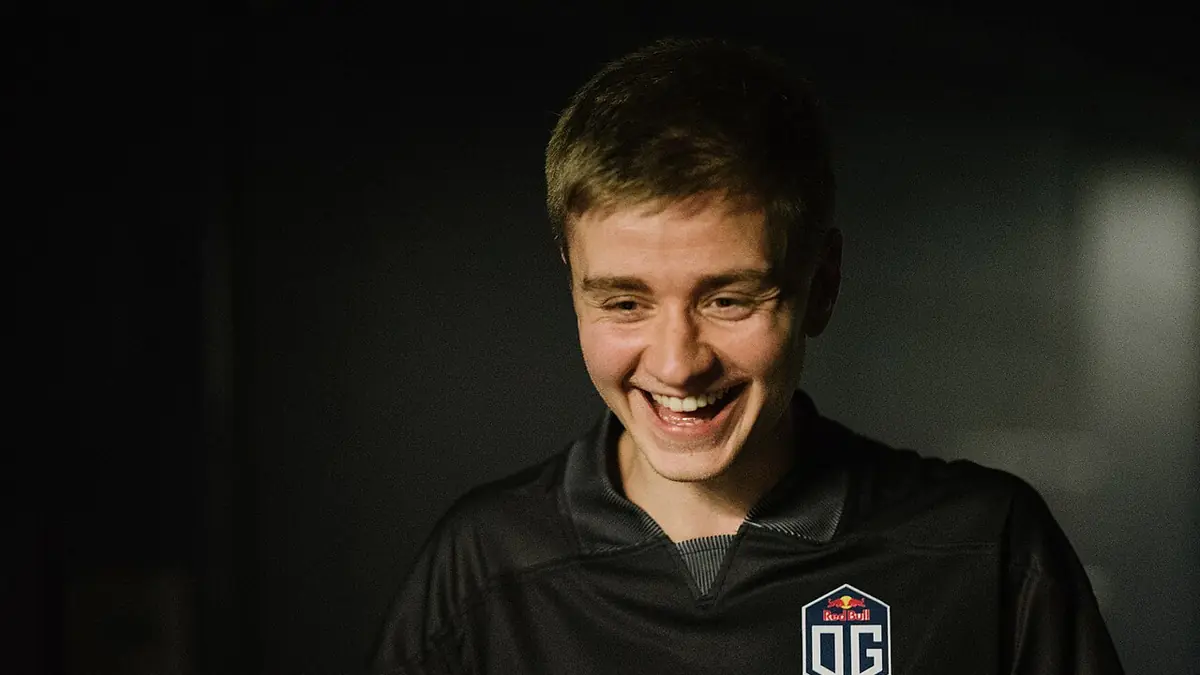
Johan Sundstein, who plays Dota 2 as N0tail, has won more prize money than anyone else in the history of competitive video games: $7,184,163.05, across 130 tournaments, according to EsportsEarnings, which records it to the cent.1 Prize money is the rare fortune that can be added up exactly. Every dollar of it was announced, in public, by the people paying it.
It is also, when you look at where it came from, almost entirely two tournaments.
The arithmetic
His record starts in 2010.1 For eight years he did well by the standards of the sport. With OG, the team he co-founded in 2015,5 he won four Majors, the biggest Dota 2 events outside the world championship, and each paid him about $200,000.15
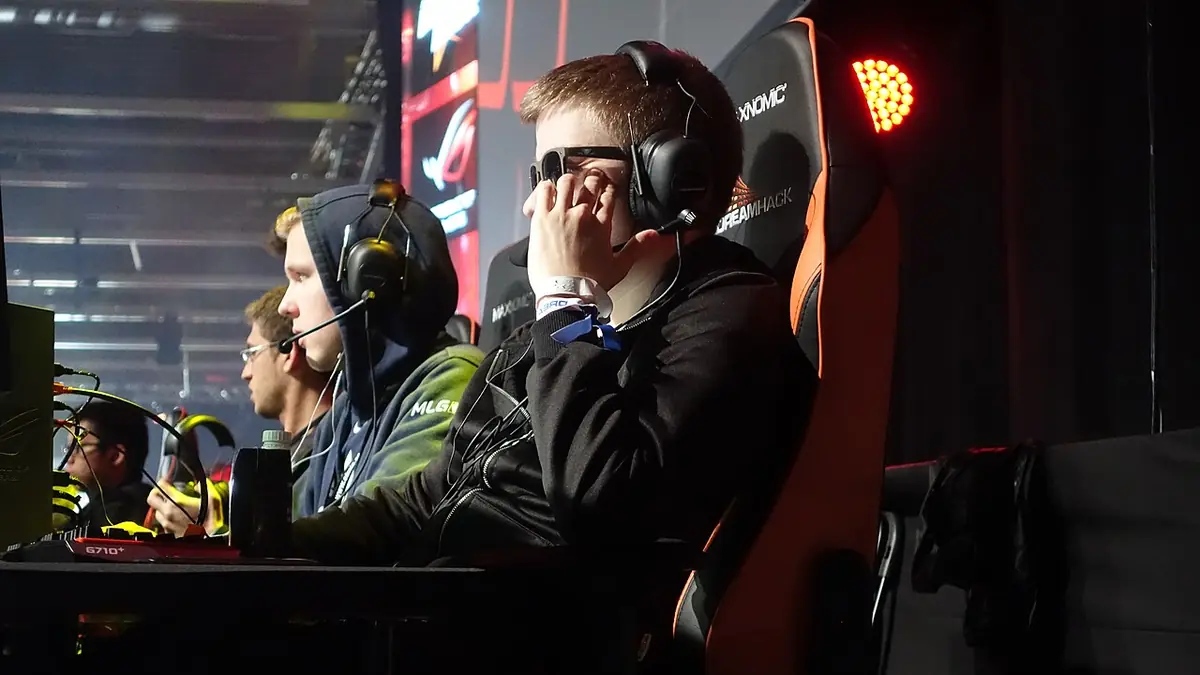
Then, in August 2018 and again in August 2019, OG won The International, the game's annual world championship. His share of the first was $2,246,831.60. His share of the second was $3,124,036.20.1 Together that is $5,370,867.80, or roughly three quarters of everything he has ever won.
The other 128 tournaments paid him about $1.81 million between them, an average of around $14,000 each.1 That is the career most professional players have. The two Internationals are the part almost nobody gets.
Where the prize money came from
Prizes in most sports come from sponsors, broadcasters or an organiser's budget. The International did it differently, and the difference is the whole of N0tail's number.
In 2018, Valve, the company that makes Dota 2, put up a base prize pool of $1.6 million. Everything above that came from players: a quarter of what they spent that year on the battle pass, a bundle of cosmetic items and in-game extras, went into the pool.3 That quarter came to $23,932,177, taking the pool to $25,532,177.3 A year later it reached $34,330,068.4
The arithmetic runs the other way too. If a quarter of battle pass spending came to about $23.9 million in 2018, the full amount spent was around $95.7 million, and the other three quarters, about $71.8 million, stayed with the company that sold it.3 The prize pool was paid for by the audience, and it was also a very good year for the publisher.
The top of that pool was steep. In 2019 OG's first prize was $15,620,181, and EsportsEarnings credits N0tail with exactly a fifth of it.41 Team Liquid, beaten in the final, took $4,462,909.4 First place paid about three and a half times second. At the top of a crowdfunded pool, the gap between winning and nearly winning is most of the money.
How OG got there
The first win is the less likely one. In May 2018, three months before the tournament, three of OG's five players left.3 Under the tournament's rules the change sent OG to the open qualifier, the route for any five players who want to try.3
The replacements were Topias Taavitsainen, a newcomer who had never played at a major live event; Anathan Pham, returning to the team; and Sébastien Debs, who had been its coach.3 That roster won the tournament, beating PSG.LGD three games to two in the final in Vancouver.3 The next year the same five beat Team Liquid three games to one in Shanghai, and OG became the first team to win The International twice.4
The part people leave out
First, prize money is shared and taxed before anybody lives on it. The winner's cheque in 2018 was $11,190,158, for the whole team,3 and EsportsEarnings credits each player with about a fifth.1 What happens after that, how much goes in tax and how much stays with an organisation under a player's contract, depends on countries and contracts and is almost never published. The $7.18 million is what was won. Nobody outside can say what was kept.
Second, how strange the top of this table is. All ten of the highest prize-money earners in esports play Dota 2, and five of the top eight are the players from those two OG wins: Sundstein, Jesse Vainikka, Pham, Debs and Taavitsainen.2 The ranking of the best-paid players in the whole industry is, in large part, the record of one crowdfunded prize pool and one team that won it twice.
That is not a comment on how good they were. It is a comment on where the money was. And it says very little about the richest people in gaming, whose money is salaries, sponsorships and streaming deals, none of which anybody publishes to the cent.
What it cost
Eight years of tournaments before the first International is the part no prize table shows. And the championship is decided once a year, in one bracket, often by a single series. OG finished somewhere between ninth and twelfth at The International in 2016.5 Two years and one roster rebuild later, it won.
Prize money is the most checkable fortune on this site and also the most all-or-nothing one. The difference between a good career and the top of the all-time table was a best-of-five in Vancouver. His last large prize, $200,100 for a shared seventh place at The International in October 2021,1 came a month before he stepped back from OG's active roster.5
One honest takeaway
The richest career in esports is real, public and exact to the cent, and it is mostly two tournaments that paid out what an audience had spent on a game. The number is honest. What it describes is not a salary, and not a plan anyone could follow. It is what winning twice, in the right two years, at the one event the audience had made enormous, turned out to be worth.
If you would like your own number published, with the working shown and nothing checked, there is a list for that.
Sources
- EsportsEarnings, "Johan 'N0tail' Sundstein", player earnings, read 19 September 2026,
- EsportsEarnings, "Top Players", read 19 September 2026,
- Wikipedia, "The International 2018",
- Wikipedia, "The International 2019",
- Wikipedia, "OG (esports)",
Written from public sources. Nobody in this story is a member, nobody paid, and nobody here is on the list. Something wrong? support@richlist.online